The XEQT vs. VFV Showdown for Canadian Investors
February 22, 2026

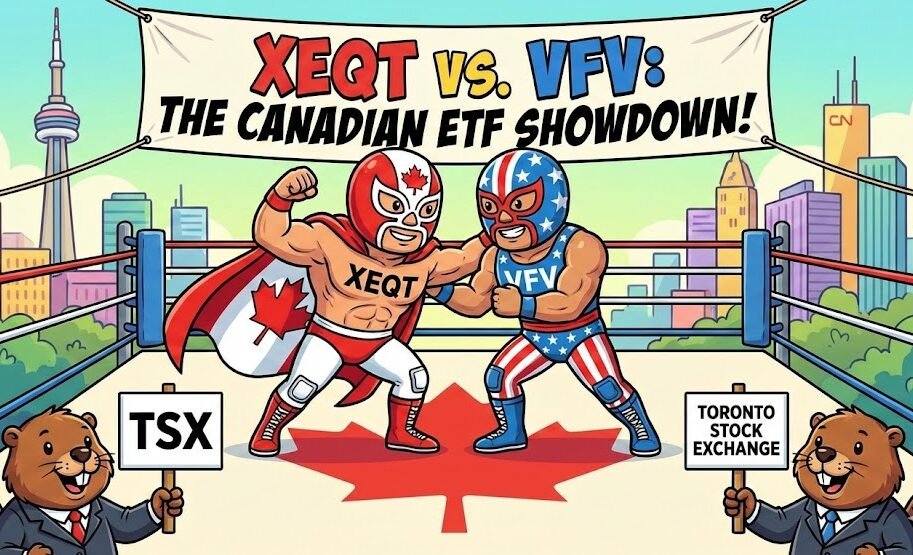
XEQT vs. VFV: A Deep Dive for Canadian Millennials and Gen Z Investors
If you are building a long-term portfolio in Canada, two ETFs come up constantly in investing conversations: XEQT and VFV. Both are low-cost, widely available, and designed for passive investors. However, they are built for very different purposes and understanding those differences is critical before deciding which belongs in your portfolio.
This guide takes a deeper, evidence-based look at how these two ETFs compare in structure, risk, diversification, and long-term strategy.
What’s the Difference Between XEQT and VFV?
The biggest difference between XEQT and VFV is their fundamental design philosophy. One is meant to be a complete portfolio solution, while the other is a single-market exposure tool.
XEQT Structure
XEQT is an all-equity portfolio ETF created by iShares. It does not hold individual stocks directly. Instead, it holds several underlying index ETFs that collectively provide global exposure. This structure gives investors instant diversification across thousands of companies worldwide.
The typical allocation includes:
- United States equities as the largest component
- Canadian equities providing domestic exposure
- International developed markets such as Europe and Japan
- Emerging markets such as China, India, and Brazil
Because of this multi-layered structure, XEQT automatically maintains a balanced global allocation without requiring investor intervention.
VFV Structure
VFV is far simpler in design. It tracks the SP500 index, which includes approximately 500 of the largest publicly traded companies in the United States. This makes it a concentrated bet on the U.S. economy and large-cap corporate performance.
Most of VFV’s exposure is heavily weighted toward a few sectors, particularly technology, communication services, and consumer discretionary. A relatively small number of companies account for a large portion of the ETF’s performance.
Core Difference in Purpose
XEQT is designed to be a complete long-term equity portfolio in a single purchase. VFV is designed to provide targeted exposure to a specific market segment. This difference affects diversification, risk, and investor strategy.
Is XEQT Better Than VFV?
Determining whether XEQT is better than VFV depends on investment goals, time horizon, and risk tolerance. However, for most long-term investors, especially those seeking simplicity and diversification, XEQT tends to be the more appropriate option.
Diversification and Risk Management
XEQT spreads investments across global markets. This reduces dependence on any single country, sector, or economic cycle. Historically, global diversification helps smooth returns over long time periods because different regions outperform at different times.
VFV, by contrast, concentrates exposure in one market. While the U.S. has delivered strong returns over the past decade, historical data shows that leadership between global markets rotates over time.
Currency and Geographic Exposure
XEQT includes Canadian holdings, which reduces currency risk for Canadian investors. VFV is entirely exposed to U.S. dollar fluctuations. While currency movements can benefit returns in some periods, they can also introduce volatility unrelated to market performance.
Portfolio Management Simplicity
XEQT automatically rebalances its underlying holdings to maintain target allocations. This removes the need for investors to manually adjust their portfolio over time. VFV requires additional ETFs if an investor wants a balanced global portfolio.
For these reasons, XEQT is often considered the more suitable default choice for long-term passive investors.
Where Can I Invest in XEQT and VFV?
Both ETFs are widely accessible to Canadian investors. They trade on the Toronto Stock Exchange and can be purchased through most brokerage platforms.
One of the most commonly used platforms among younger investors is Wealthsimple.
Wealthsimple offers:
- Commission-free trading
- Automatic recurring investments
- User-friendly mobile and web interfaces
- Ability to hold ETFs within registered accounts
Investors can purchase XEQT and VFV inside a TFSA, RRSP, FHSA, or taxable investment account. The choice of account type can significantly affect tax efficiency, particularly for long-term growth strategies.
Can I Buy Both XEQT and VFV?
Yes, investors can hold both ETFs in the same portfolio. However, it is important to understand the implications of doing so.
Because XEQT already contains a large allocation to U.S. equities, adding VFV effectively increases exposure to the U.S. market. This does not increase diversification. Instead, it creates an intentional overweight toward one region.
Some investors choose this approach to increase exposure to U.S. technology companies or to reflect a personal belief that U.S. markets will continue to outperform globally. However, this strategy introduces additional concentration risk and requires more active oversight.
Should I Own Both XEQT and VFV in My Portfolio?
For most passive investors, holding both is unnecessary and can complicate portfolio management.
When XEQT Alone Is Sufficient
If your primary goal is long-term wealth accumulation with minimal effort, XEQT already provides comprehensive exposure. It offers global diversification, automatic rebalancing, and broad market coverage in a single ETF.
When Combining May Make Sense
There are scenarios where holding both could be justified. Investors who want to overweight the U.S. market may intentionally add VFV to increase exposure. This approach may be appropriate for individuals with strong convictions about U.S. economic growth or those seeking higher exposure to technology sectors.
However, this strategy requires periodic monitoring and rebalancing to ensure that allocations do not drift too far from intended targets.
Risk Profiles and Volatility Considerations
Understanding risk differences between XEQT and VFV is essential for long-term investors.
XEQT Risk Characteristics
XEQT is diversified across multiple regions and sectors. This diversification reduces the impact of downturns in any single market. While it remains an all-equity investment and can experience significant short-term volatility, its global exposure helps stabilize long-term performance.
VFV Risk Characteristics
VFV’s concentration in the U.S. market exposes investors to region-specific economic risks. It also has high exposure to a relatively small number of large companies. During periods when U.S. technology stocks decline, VFV can experience sharper drawdowns compared to globally diversified portfolios.
Long-Term Return Expectations
Historically, the SP500 has delivered strong long-term returns, which has contributed to VFV’s popularity. However, past performance does not guarantee future results.
Global markets have historically experienced cycles of leadership. There have been extended periods when international markets outperformed the United States. XEQT’s diversified structure allows investors to benefit from these shifts without needing to predict market trends.
Over very long investment horizons, diversified portfolios often produce more consistent and predictable outcomes.
Ideal Investor Types for Each ETF
Who XEQT Is Best For
XEQT is well suited for investors who want a simple, long-term investment strategy. It appeals particularly to younger investors who prioritize convenience, diversification, and automatic portfolio management.
It is often recommended for individuals building their first portfolio or those who prefer a passive investing approach.
Who VFV Is Best For
VFV may be more appropriate for investors who already have diversified holdings and want to increase U.S. exposure. It can also appeal to investors who are comfortable managing multiple ETFs and rebalancing their portfolio periodically.
Final Recommendation: Why XEQT Is the Better Fit for Most Investors
For most Canadian Millennials and Gen Z investors, XEQT represents a more practical and effective long-term solution as they have a longer timeframe for compounding than some of the older generations.
It offers instant global diversification, automatic rebalancing, and exposure to thousands of companies worldwide. This reduces the need for active management and minimizes the risk associated with market concentration.
While VFV can deliver strong returns during periods of U.S. market outperformance, it requires additional portfolio construction to achieve similar diversification.
For investors focused on long-term wealth building with minimal complexity, XEQT provides a more balanced and resilient foundation.
Disclaimer
This content is provided for educational purposes only and should not be considered financial advice. Investing involves risk, and individuals are responsible for making their own financial decisions based on their personal circumstances, investment objectives, and risk tolerance.