Oil Pops While Futures Drop
March 2, 2026

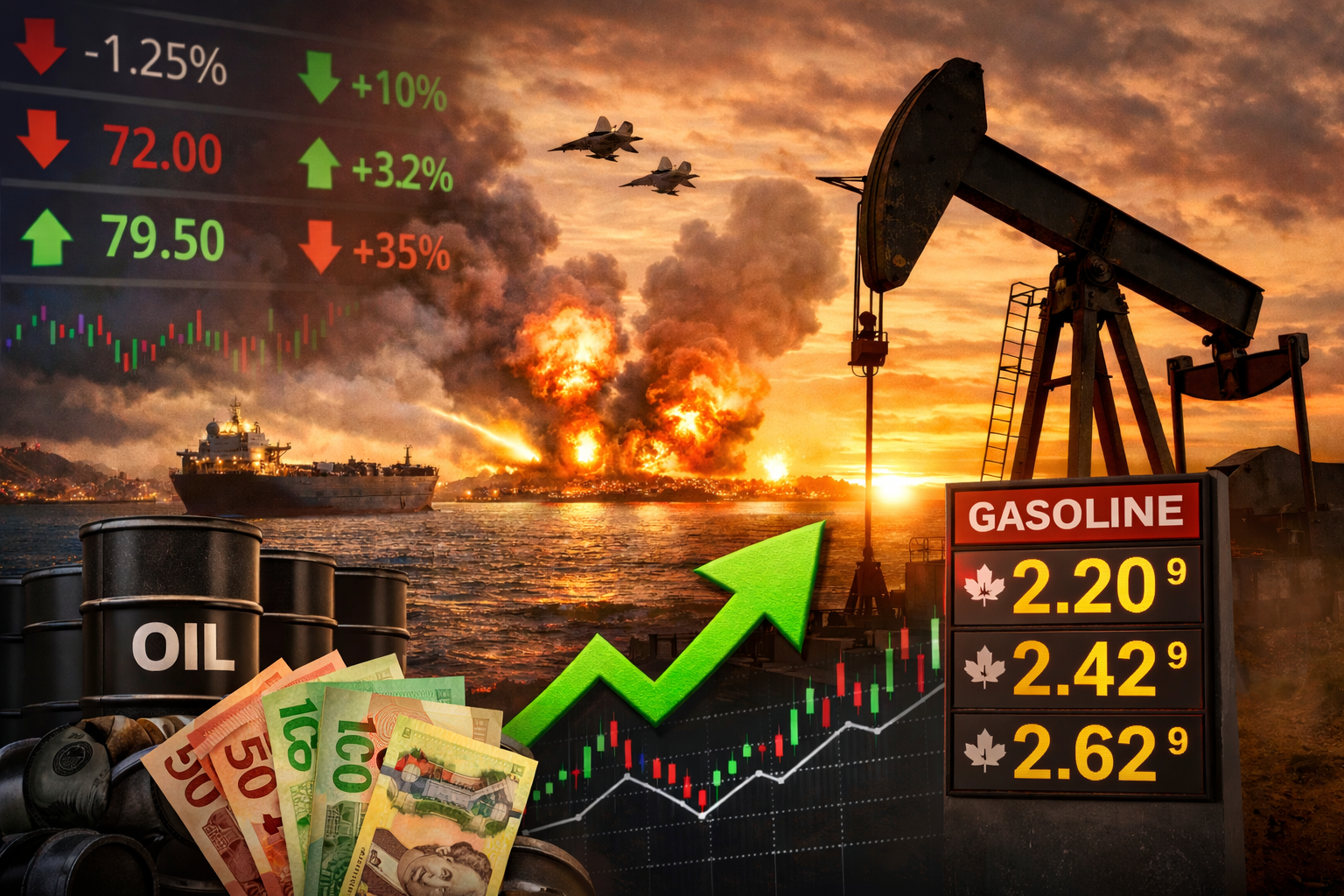
Energy traders did not waste any time hitting the panic button. Another global political event and an instant futures drop across the board.
When futures markets reopened Sunday night, oil prices shot higher after the United States and Israel carried out coordinated strikes on Iranian targets over the weekend. The reaction was immediate and sharp, reflecting how sensitive global energy markets remain to geopolitical shocks.
US benchmark crude climbed roughly five dollars per barrel in early trading, pushing prices into the low seventies. International benchmark Brent crude spiked even more dramatically at first, briefly surging into the low eighties before easing back toward the high seventies within minutes.
That kind of move might sound dramatic, but in the world of oil trading, it was not entirely unexpected. Investors had already been positioning for conflict in the region, meaning some of the risk was priced in before the first missiles were even launched.
Stocks Slip While Energy Wins
While oil producers enjoyed a bump, the broader market moved in the opposite direction.
Futures tied to major US stock indexes all pointed lower at the open, reflecting investor anxiety about potential economic fallout. At the same time, shares of large oil companies moved higher as traders anticipated stronger profits from rising crude prices.
Defense contractors also saw mild gains, a predictable response whenever global tensions escalate.
In short, markets followed a familiar playbook. Risk assets dipped, energy surged, and investors braced for uncertainty.
Why Iran Matters So Much to Oil
Iran’s importance in the global energy system cannot be overstated.
The country sits on one of the largest known oil reserves on the planet and remains a significant exporter despite years of sanctions. Beyond production, Iran also holds strategic geographic leverage through its position along one of the world’s most critical shipping corridors.
Because oil is traded globally, even a disruption limited to one region can ripple across the entire market. Traders know this, which is why any conflict involving Iran tends to send prices moving quickly.
Efforts by major oil producing nations to increase output slightly may help calm nerves at the margins, but analysts generally believe those increases are too small to offset a major supply disruption if the conflict escalates.
The Real Pressure Point: A Narrow Waterway
The biggest concern is not Iran’s oil fields themselves. It is the Strait of Hormuz.
This narrow maritime passage carries an enormous share of the world’s oil supply. Tankers from major Middle Eastern producers pass through it daily on their way to global markets.
If shipping through this route were blocked, even temporarily, the impact would be enormous. Energy analysts often describe the strait as the single most important chokepoint in global oil logistics.
Iran has previously threatened to restrict access during periods of tension. While actually closing the waterway would be a dramatic step, even the possibility is enough to send markets into defensive mode.
A prolonged disruption could push crude prices toward triple digit territory, according to many industry forecasts.
Asia Faces the Biggest Exposure
Not all economies would feel the impact equally.
Asian nations that rely heavily on imported energy would likely be hit hardest. China and India, in particular, consume large volumes of oil from the region.
If Iranian exports were disrupted, these countries would scramble to secure alternative supplies. That competition could drive global prices even higher, since oil markets function as an interconnected system.
Simply put, a supply shock in one region becomes a pricing shock everywhere.
What It Means at the Gas Pump
For consumers, the most visible impact would show up quickly at the fuel pump.
Wholesale gasoline prices typically react fast to crude oil movements, and analysts expect retail prices to follow if tensions remain elevated. Even a moderate rise in oil prices can translate into steady daily increases for drivers.
Higher fuel costs would also ripple through the broader economy by pushing up transportation expenses and inflation pressures.
That is why energy markets are often seen as a real time barometer of geopolitical risk. When oil spikes, it signals not just supply concerns, but wider economic anxiety.
The Big Unknown: How Long This Lasts
Right now, traders are betting the disruption will be temporary. For all you JustBuyXEQT fans out there, this likely means yet another dip to gobble up in your long term horizon.
But the situation remains highly unpredictable. A short conflict could allow markets to stabilize quickly. A prolonged confrontation or damage to critical infrastructure could trigger a much larger and longer lasting price surge.
History shows that oil prices tend to spike sharply during the early stages of conflict, then settle if tensions ease.
For now, markets are caught between those two possibilities. Investors are watching closely, knowing that in the energy world, stability can vanish overnight.