A Supreme Court Smackdown for Uncle Donny
February 21, 2026

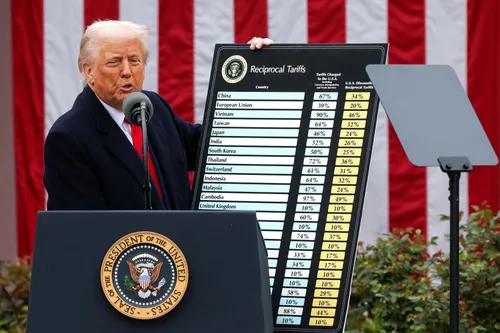
In a ruling that could shake global trade policy, the U.S. Supreme Court has shut down Donald Trump’s sweeping tariff strategy. In a 6–3 decision, the court ruled that Trump overreached by using the International Emergency Economic Powers Act (IEEPA) to impose worldwide tariffs without congressional approval.
Chief Justice John Roberts made the majority’s stance clear: IEEPA was never intended to give a president unilateral power to reshape global trade. The decision delivers a major blow to a tariff-driven agenda that had become a centerpiece of Trump’s economic policy.
But the fight isn’t over.
Within hours, Trump announced plans for a new 10% global tariff starting Tuesday, this time citing Section 122 of the Trade Act of 1974 as his legal workaround. He also signaled potential new trade investigations under Section 301, raising the possibility of more tariffs ahead.
One major uncertainty remains — what happens to the roughly $130 billion already collected under the invalidated tariffs. The Supreme Court left that question to lower courts, setting up what could become a complex legal battle over refunds.
For markets, the ruling is another reminder of how quickly political decisions can inject volatility. Trade policy shifts like this can move sentiment overnight, making short-term market reactions nearly impossible to predict.
That’s why many long-term investors lean on diversification. In uncertain environments like this, holding a broad global ETF such as XEQT can help smooth volatility, spreading risk across markets instead of relying on any single policy outcome.