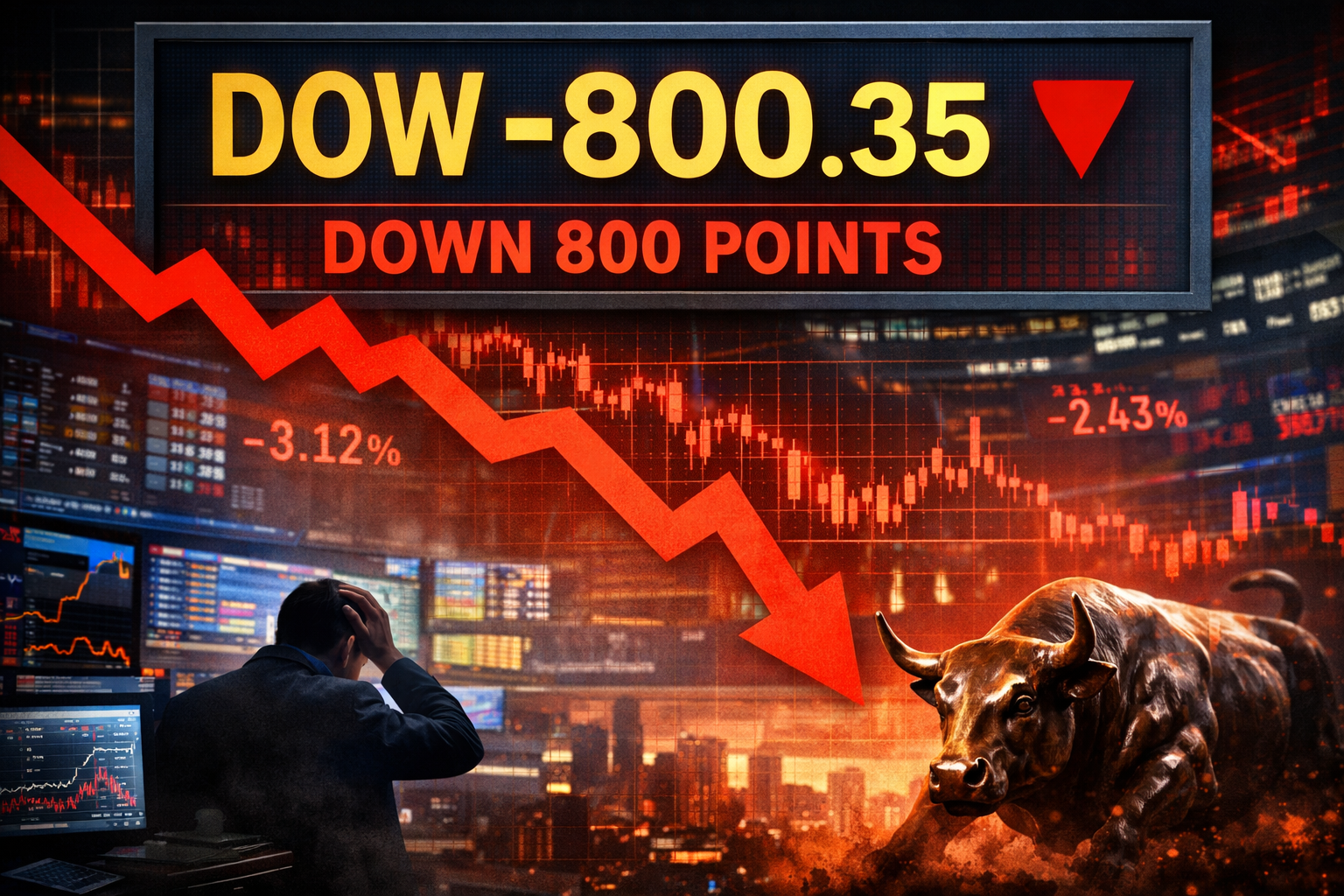
Dow drops 800 Points in a Rough Start to the Week
February 23, 2026

Global markets opened the week on shaky ground after renewed trade tensions unsettled investors.
Stocks fell sharply Monday morning following comments from Uncle Donny over the weekend confirming plans to expand worldwide tariffs. The announcement came shortly after the U.S. Supreme Court struck down most of his earlier reciprocal duties.
All three major U.S. indexes moved lower. The Dow Jones Industrial Average dropped roughly 800 points, a decline of about 1.6 percent. The Nasdaq fell around 1.3 percent, while the S&P 500 slid approximately 1.1 percent. The pullback erased part of last week’s gains, when equities had staged a modest rebound and the Nasdaq ended a five week losing streak.
New Tariffs Add to Global Uncertainty
The latest market pressure stems from policy developments late last week. After the court ruled that Trump lacked authority under emergency economic powers law to impose earlier tariffs, he responded by announcing a new global duty of 10 percent. Within a day, that figure was raised to 15 percent using alternative legal tools.
The ripple effects are already being felt overseas. Reports suggest the European Union is considering pausing ratification of a pending trade agreement with the United States while officials seek clarity on the scope of the new tariff framework.
Investors Shift Toward Defensive Assets
The uncertainty quickly spread across asset classes. Bitcoin traded near session lows around 64,700 dollars as investors stepped away from risk sensitive positions. U.S. government bonds saw stronger demand, pushing the 10 year Treasury yield down to just over 4 percent from about 4.09 percent at last week’s close.
Traditional safe haven assets surged. Gold futures climbed close to 3 percent, while silver prices jumped roughly 6 percent. Oil prices edged slightly lower, with U.S. crude trading in the mid 60 dollar range per barrel. The U.S. dollar also weakened modestly against a basket of major currencies.
Analysts say the reaction reflects a familiar pattern. When policy visibility declines, investors tend to rotate toward safer and more liquid holdings until clearer direction emerges.
Big Tech Mixed as Volatility Returns
Major technology stocks were not spared in the selloff. Most mega cap names traded lower, though Apple and Nvidia posted small gains ahead of Nvidia’s closely watched earnings release later this week.
The Long Term Investing Lesson
For long term investors, episodes like this reinforce a consistent takeaway. Markets can swing sharply in response to political developments, but broad diversification remains one of the most effective ways to manage volatility.
Index funds allow investors to stay invested through periods of uncertainty without trying to predict every policy driven shock, helping smooth returns over time even when headlines turn turbulent.